Sneaker Slam
From Culture to Understanding


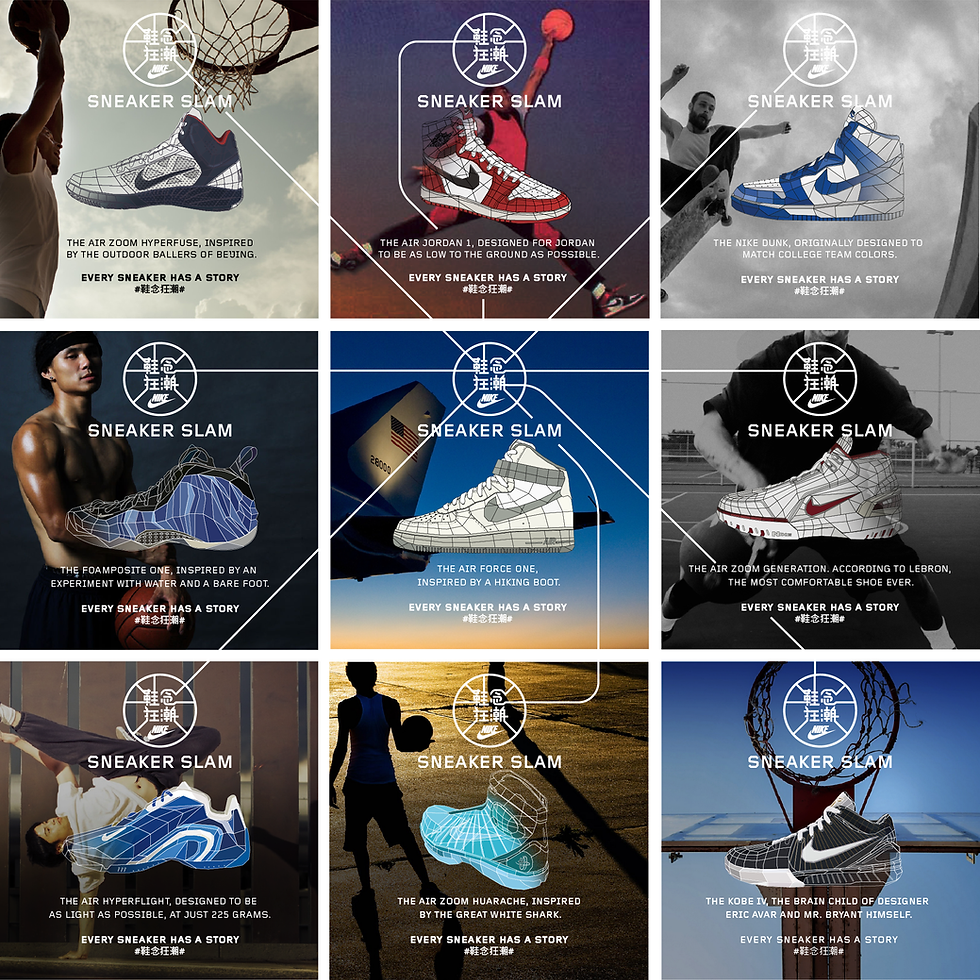
The identity is built on a radial system inspired by explosion and expansion. Lines extend outward from the centre, expressing energy, movement, and cultural spread. This visual language was applied consistently across all touchpoints, from spatial design to digital formats such as WeChat grids, ensuring a cohesive and recognisable system. The logo was designed as a flexible hybrid mark. It can exist as a complete form, a fragmented version, or be reinterpreted as a basketball graphic. This adaptability allows the identity to remain dynamic across different contexts while maintaining a strong central recognition.

Sneaker Slam was created in response to a clear gap. Chinese youth have strong spending power in sneaker culture, but limited understanding of its origins, value, and meaning. We positioned the event not just as a marketplace, but as an educational platform that connects product with culture. The project was developed in collaboration with AKQA Shanghai during our earlier practice, bringing together local Chinese creatives and international artists to build a shared narrative around sneakers. It was not just about collecting, but about understanding. This direction was further reinforced by the presence of LeBron James, grounding the event within global basketball and sneaker culture. Through research, we identified Nike Air Force 1 as a key cultural starting point. It is one of the most influential silhouettes in sneaker history, shaping both street culture and sneaker behaviour. We translated this into the concept of a “Big Bang”, positioning Air Force 1 as the origin from which all sneaker culture expands. This gave the event a clear narrative anchor, allowing every visual and communication piece to connect back to a single idea of beginning, influence, and evolution.

Sneaker Slam was designed as a physical and cultural experience. From installations to exhibitions, every element was structured to immerse the audience in the narrative of sneaker culture. The system allowed content, products, and stories to coexist within a unified visual framework, turning the event into both a learning platform and a cultural destination. This project was developed in collaboration with AKQA Shanghai. All rights reserved to AKQA Shanghai.